
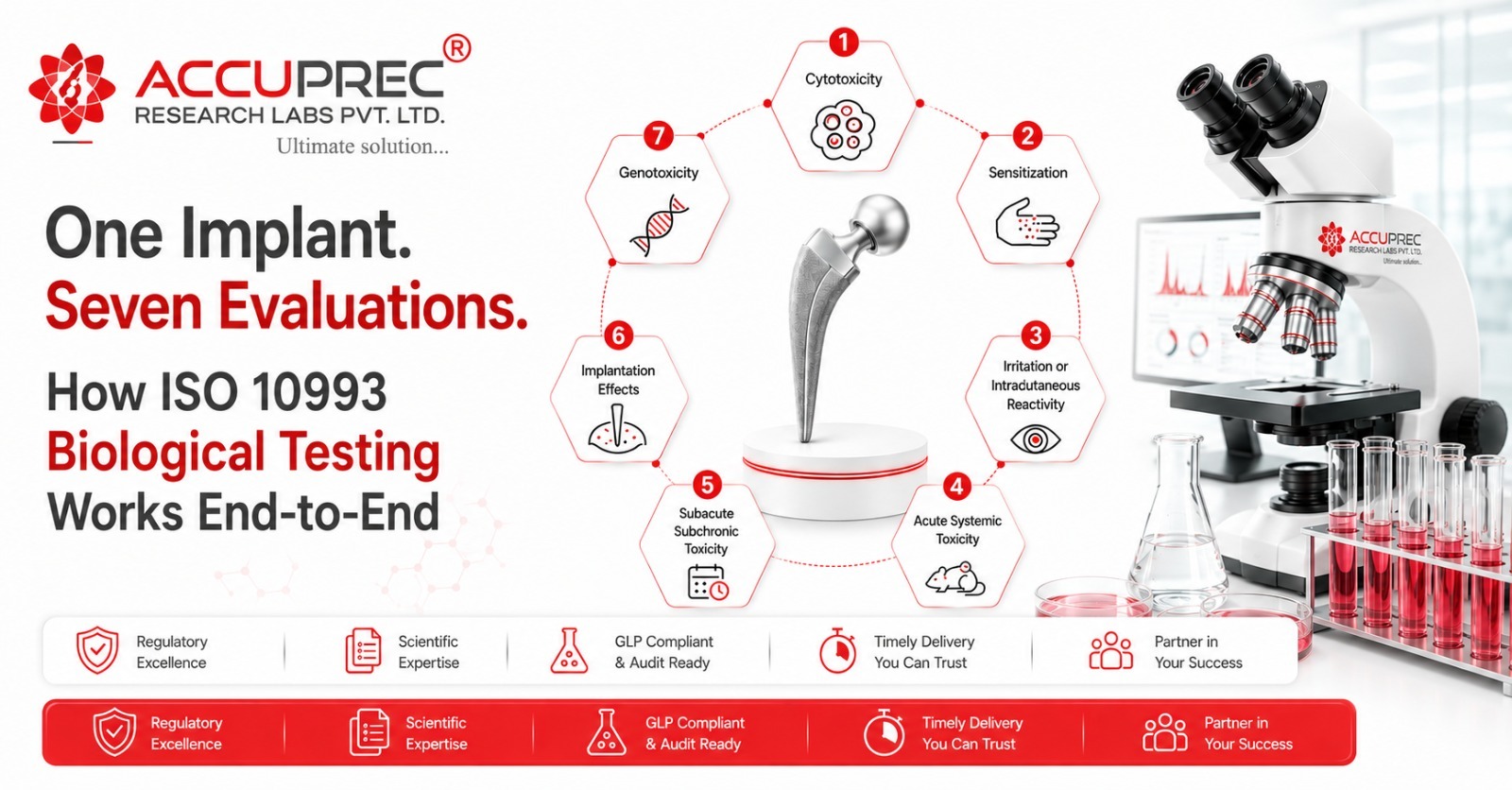

One Implant.
Seven Evaluations.
How ISO 10993 Biological
Testing Works End-to-End
A complete guide to the seven biological safety evaluations every implantable medical device must pass — and why a risk-based, end-to-end strategy makes all the difference.
The global medical device industry is evolving rapidly, with manufacturers developing increasingly advanced implantable devices designed to improve patient outcomes and long-term clinical performance. However, before any implantable medical device can enter the market, it must undergo rigorous biological safety evaluation to ensure it does not pose harmful risks to patients.
Under ISO 10993, biological evaluation has become one of the most critical regulatory requirements for implantable medical devices. Regulatory authorities worldwide now expect manufacturers to generate scientifically robust evidence demonstrating that their products are biologically safe for their intended clinical application.
For many device manufacturers, understanding how biological testing works end-to-end can be challenging. The process involves multiple evaluations, complex scientific interpretation and strict regulatory expectations. Without a well-planned testing strategy, companies often face approval delays, repeated studies and increased regulatory scrutiny.
At Accuprec Research Labs Pvt. Ltd., we help medical device manufacturers navigate the complete ISO 10993 biological evaluation process through scientifically designed testing strategies, advanced laboratory capabilities and regulator-ready documentation support.
Why Biological Evaluation Matters for Implantable Devices
Implantable medical devices interact directly with human tissues and remain in the body for extended periods. Because of this prolonged exposure, regulators require comprehensive biological safety assessments to evaluate potential risks associated with device materials, manufacturing processes and chemical interactions.
Biological evaluation helps determine whether a device may cause:
- Toxicity
- Irritation
- Sensitization
- Genetic damage
- Tissue reactions
- Systemic adverse effects
- Long-term biological complications
The purpose of ISO 10993 testing is not only to achieve regulatory compliance but also to ensure patient safety throughout the product lifecycle.
Understanding the ISO 10993 Biological Evaluation Framework
ISO 10993 provides a risk-based framework for evaluating the biological safety of medical devices. The specific testing requirements depend on several important factors. For implantable devices, biological evaluation is typically more extensive because these products remain in direct contact with tissues, blood, or bone for prolonged periods.
Key factors that determine testing scope include:
Nature of body contact
Duration of exposure
Device material composition
Intended clinical application
Manufacturing processes
Sterilization methods
A complete biological evaluation strategy often includes multiple interconnected assessments designed to identify both short-term and long-term biological risks.
The Seven Key Biological Evaluations
For many implantable medical devices, ISO 10993 biological testing includes seven major evaluations that collectively provide a comprehensive safety profile.
Cytotoxicity Testing
Cytotoxicity studies evaluate whether device materials can damage or kill living cells. This is often one of the first biological assessments performed because it provides early insight into material safety.
These studies help identify potential toxic effects caused by chemicals released from the device.
Sensitization Testing
Sensitization studies assess whether a device may trigger allergic reactions following repeated exposure.
This evaluation is especially important for implantable materials that remain in prolonged contact with biological tissues.
Irritation or Intracutaneous Reactivity
These studies evaluate whether device materials may cause localized irritation, inflammation, or tissue reactions when exposed to the body.
Regulators closely review irritation data to ensure patient comfort and tissue compatibility.
Acute Systemic Toxicity
Acute systemic toxicity studies assess whether chemicals released from the device can produce harmful effects throughout the body after short-term exposure.
This evaluation helps identify potential systemic health risks associated with device materials.
Subacute & Subchronic Toxicity
These studies evaluate the biological effects of repeated or prolonged exposure to device-related compounds over extended durations.
They provide critical information regarding long-term biological safety and systemic tolerance.
Implantation Studies
Implantation evaluations assess how tissues respond directly to implanted materials over time. For implantable medical devices, these studies are often central to regulatory approval. They help determine:
- Tissue compatibility
- Inflammatory responses
- Healing behavior
- Local biological reactions
- Long-term implant performance
Genotoxicity Testing
Genotoxicity studies evaluate whether device-related compounds may damage genetic material or increase mutation risks.
These assessments are particularly important for devices involving prolonged patient exposure.
Challenges Manufacturers Commonly Face
Many manufacturers struggle with ISO 10993 biological evaluation because the process involves more than simply performing isolated tests. Without proper scientific planning, companies often face repeated testing requirements, higher costs and delayed approvals.
- Incomplete biological evaluation plans
- Poor risk assessment strategies
- Incorrect test selection
- Inadequate sample preparation
- Weak scientific justification
- Lack of toxicological interpretation
- Non-compliant documentation
- Regulatory deficiencies during review
Without proper scientific planning, companies often face repeated testing requirements, higher costs and delayed approvals — all of which could be avoided with a well-designed, risk-based evaluation strategy from the outset.
The Importance of a Risk-Based Strategy
Modern ISO 10993 evaluation is heavily focused on risk management and scientific justification. At Accuprec, our scientific experts help manufacturers design customized biological evaluation strategies aligned with device-specific regulatory requirements. This approach helps optimize testing programs while ensuring comprehensive biological safety assessment.
Regulators increasingly expect manufacturers to demonstrate that testing decisions are based on:
Material Characterization
Deep understanding of device material composition, processing aids and potential leachable compounds.
Toxicological Assessment
Scientific evaluation of identified chemicals against established patient safety thresholds.
Clinical Exposure Conditions
Realistic evaluation of patient exposure scenarios based on intended device use and duration.
Device-Specific Risk Analysis
Customized risk assessment tailored to the unique characteristics and clinical application of each device.
Advanced Infrastructure & Scientific Expertise
At Accuprec Research Labs Pvt. Ltd., we provide comprehensive biological testing solutions supported by advanced infrastructure, experienced scientific teams and regulatory-focused operations. Our laboratories operate with strict quality standards and GLP-focused systems to ensure accurate, reproducible and regulator-ready data generation.
Testing Capabilities
- Cytotoxicity studies
- Sensitization testing
- Irritation studies
- Acute and repeated-dose toxicity evaluations
- Implantation studies
- Genotoxicity assessments
- Toxicological risk evaluation
- Biological evaluation reporting
GLP-Compliant Operations
All studies executed under Good Laboratory Practice standards ensuring data integrity, reproducibility and regulatory acceptance.
Experienced Scientific Teams
Specialists in biological evaluation, toxicology and medical device regulatory science working closely with your team.
Regulatory-Ready Documentation
Audit-ready reports, BERs, TRAs and scientific justifications built for FDA, EU MDR and global regulatory submissions.
Why Choose Accuprec?
At Accuprec Research Labs Pvt. Ltd., we support medical device manufacturers through every stage of ISO 10993 biological evaluation. We work closely with manufacturers to ensure testing strategies are scientifically robust, compliant and aligned with global regulatory expectations.
- Comprehensive biological testing capabilities
- GLP-compliant operations
- Experienced scientific professionals
- Regulatory-focused study execution
- Reproducible and reliable data generation
- End-to-end scientific support
- Faster turnaround with quality-focused execution
Seven Evaluations. One Confident Approval.
ISO 10993 biological evaluation is a critical part of ensuring the safety and regulatory success of implantable medical devices. From cytotoxicity and sensitization to implantation and genotoxicity studies, every evaluation contributes to building a comprehensive biological safety profile.
Manufacturers that adopt scientifically planned, risk-based testing strategies are better positioned to achieve faster approvals and stronger regulatory confidence. With advanced laboratory infrastructure, scientific expertise and regulator-ready support, Accuprec Research Labs Pvt. Ltd. helps medical device companies confidently navigate ISO 10993 biological testing from start to finish.